
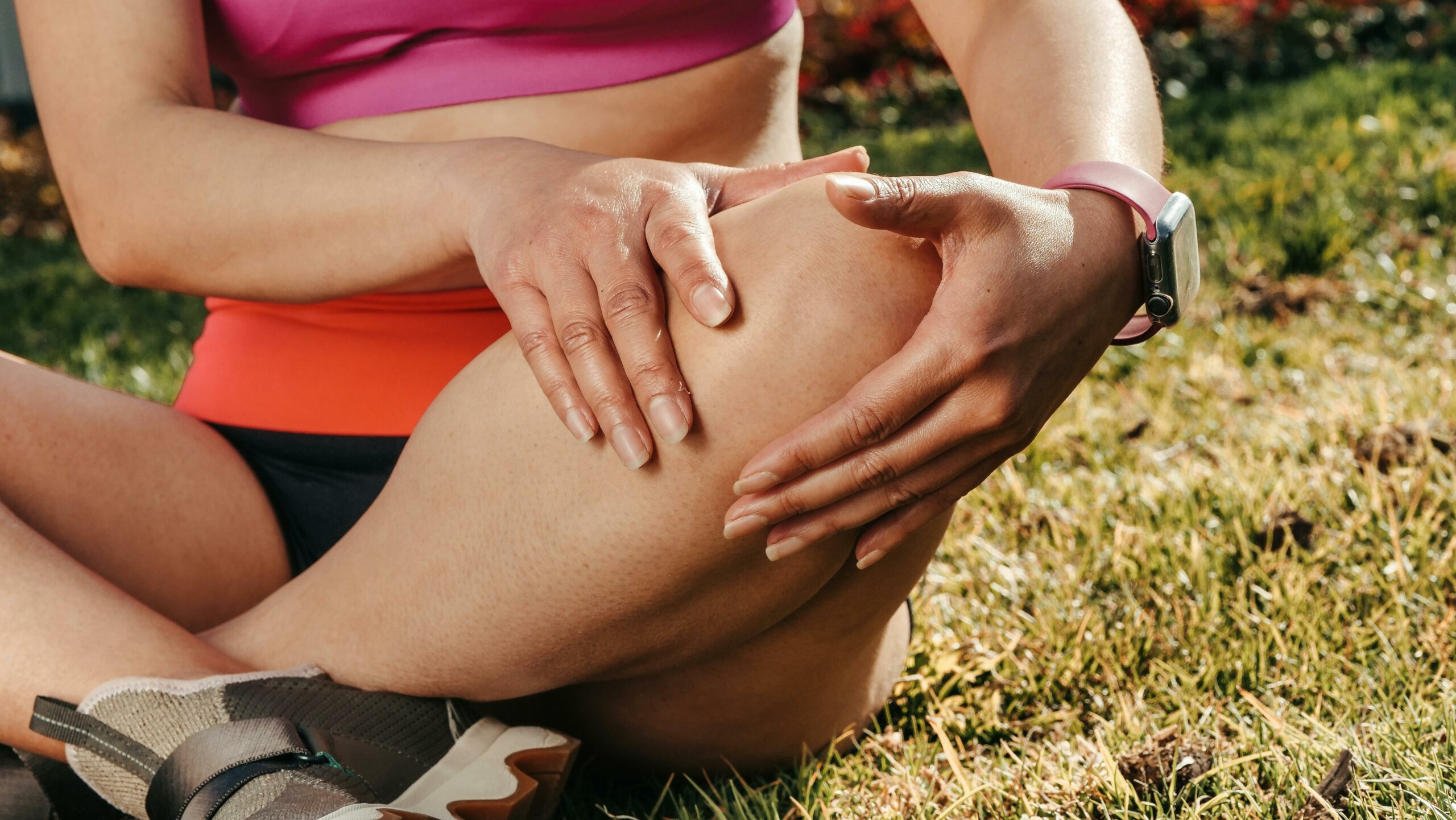
Your knee was fine during the run. Then you sat down for twenty minutes, stood back up, and – there it is. That dull ache just below the kneecap, or maybe on the side, or deep inside the joint. Sound familiar ? Knee pain after sport is one of the most common complaints among people who exercise, whether you’re a seasoned runner or someone who just started going to the gym twice a week. And yet most people have no idea what’s actually causing it – or what to do about it beyond just waiting and hoping it goes away.
Before you start googling symptoms at midnight…
If you’re looking for proper support products during recovery, it’s worth browsing https://sante-bien-etre-shop.com, they stock a solid range of joint supports and recovery aids that can complement what you’re doing on the rehab side. But before you buy anything, let’s get into what’s actually going on with your knee.
First : not all knee pain is the same
This sounds obvious, but it matters. A sharp pain that hits mid-run and forces you to stop is a completely different beast from a soreness that builds gradually over weeks. One might be a ligament issue. The other could be tendinopathy or cartilage irritation.
The location tells you a lot too.
Pain at the front of the knee (around or under the kneecap) is often patellofemoral pain syndrome – sometimes called “runner’s knee.” Very common, often linked to overuse or poor tracking of the kneecap.
Pain on the outer side of the knee is frequently the iliotibial band, a thick piece of connective tissue that runs down the outside of your thigh. IT band syndrome is almost a rite of passage for runners. Annoying, but manageable.
Pain just below the kneecap, on the patellar tendon, points toward patellar tendinopathy. Common in jumpers and cyclists.
Pain behind the knee or deep inside the joint is trickier. Could be a Baker’s cyst, cartilage wear, or something worth getting checked properly.
If the pain came on suddenly during a single session – especially with a popping sound or immediate swelling – stop reading this and see a doctor. That’s not the territory of a blog article.
Why does knee pain happen after sport specifically ?
A few recurring culprits keep showing up, and honestly, most of them come down to the same thing : the load exceeded what the structure could handle.
Too much, too fast. You increased your mileage, added intensity, or started a new activity without giving your body time to adapt. The muscles and tendons around the knee weren’t ready. Simple as that.
Weak glutes and hips. This one surprises a lot of people. If your glutes aren’t doing their job, your knee compensates. It rotates slightly inward with every step, and over time, that misalignment grinds things down. A lot of knee pain is really a hip problem in disguise.
Tight quads or hamstrings. If the muscles around the knee are chronically tense, they pull on the structures they attach to. That creates friction and pressure where you don’t want it.
Poor footwear or running form. Not always the main cause, but worth checking. Running shoes that are worn down or simply wrong for your foot type can change how forces travel up your leg.
Sitting too much between sessions. The knee doesn’t like being locked in flexion for hours, then immediately asked to perform. If you spend most of your day at a desk and then go straight into a hard session, your joints notice.
What to do when your knee hurts after sport
Let’s be practical here.
In the short term
Back off the volume. Not necessarily stop completely, but reduce intensity and impact. Running through sharp pain is rarely clever. Swimming or cycling (at low resistance) is usually fine to maintain fitness while things calm down.
Ice it if there’s swelling or heat. 15 to 20 minutes, a few times a day in the first 48 hours. Don’t apply ice directly to skin.
Elevate when resting. Keeps swelling in check.
Anti-inflammatories ? Can help short-term, but don’t use them as a way to keep training through pain. You’re masking a signal your body is sending for a reason.
In the medium term : address the cause
This is where most people go wrong. They rest, the pain fades, they go back to training exactly as before – and it comes back within two weeks. Sound familiar ?
The fix isn’t just rest. It’s strengthening what was weak and loading the tissue progressively to help it adapt.
The exercises worth doing
These are not miracle cures. They’re the exercises that consistently show up in physiotherapy for knee pain, particularly patellofemoral issues and IT band syndrome.
Wall sits. Hold a seated position against a wall, thighs parallel to the floor, for 30 to 60 seconds. Builds quad endurance without high impact. Start with shorter holds if needed.
Clamshells. Lie on your side, knees bent, feet together. Open your top knee like a clamshell, keeping your feet in contact. Slow and controlled. This targets the gluteus medius – one of the most important muscles for knee stability. Do 3 sets of 15.
Single-leg glute bridges. Lie on your back, one foot flat on the floor, the other extended. Push through the heel to lift your hips. Really squeeze the glute at the top. This is harder than it sounds.
Step-downs. Stand on a step with one leg. Slowly lower the other leg toward the floor – tap it lightly, don’t put weight on it – then rise back up. The knee of the standing leg should track over the second toe. This one directly trains the quad and glute in a functional movement pattern.
Terminal knee extensions with a band. Attach a resistance band at knee height, loop it behind one knee, and stand facing the anchor point. With a slight bend in the knee, push it back against the band to straighten. Excellent for the VMO (the teardrop-shaped muscle just above the inner kneecap that often underperforms in people with anterior knee pain).
Hip flexor stretch. Tight hip flexors tilt the pelvis and affect how the knee moves. A simple lunge stretch, held for 45 seconds, done daily, makes more difference than most people expect.
I’d suggest doing these 3 to 4 times a week rather than daily – the tissues need time to recover and adapt.
When should you actually see someone ?
Good question, and I think people either ignore this too long or panic too early.
See a physiotherapist if :
– the pain has been there for more than 3 weeks without improvement
– you’re changing how you walk to avoid discomfort
– the knee swells consistently after activity
– it locks up or gives way
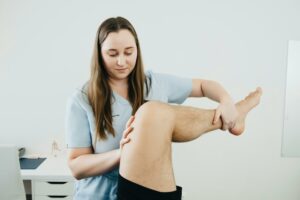
A good physio will assess your movement patterns, not just the knee in isolation. That’s what makes the difference between a real fix and an endless cycle of rest and relapse.
The honest truth about knee pain and sport
Most knee pain in active people is not the end of the world. It’s not necessarily arthritis, it’s not necessarily a torn ligament, and it doesn’t mean you need to stop exercising forever. What it usually means is that something in your training load or movement patterns needs adjusting.
The frustrating part is that the fix takes weeks, not days. But done properly – reducing load, strengthening the right muscles, addressing mobility – the majority of overuse knee injuries resolve completely.
The ones that don’t are usually the ones that got ignored too long or trained through without adaptation. Don’t be that person.