

You finished your run, your legs feel like concrete, and somewhere around your Achilles there’s that familiar dull ache that wasn’t there last week. So you do what everyone does : you grab your ankle, pull it toward your backside, hold for thirty seconds, and hope for the best.
But here’s the thing – depending on what’s actually going on in that muscle or tendon, stretching might be exactly the wrong move. And a massage might be the answer. Or the opposite. It depends, and that’s precisely what this article is about.
There’s a lot of confusion around this, and frankly, most people just default to stretching because it’s free and feels like they’re doing something. If you’re curious about what proper hands-on muscle work actually looks like, sites like relaxation-massage-colmar.fr give a good sense of what professional massage therapy involves – and it’s not just a luxury spa thing.
First : what are we actually talking about ?
 Let’s be clear about the three situations, because they’re not the same at all.
Muscle soreness (the kind that shows up 24 to 48 hours after exercise) is called DOMS – delayed onset muscle soreness. It’s caused by microscopic damage to muscle fibres, mostly from eccentric contractions. Basically, your muscles worked hard, they’re inflamed, they’re rebuilding. That’s normal.
Tight muscles are a different beast. A tight muscle isn’t necessarily damaged. It’s a muscle that’s been overused, is holding tension, or is protecting something nearby. Your upper traps after a week of bad posture ? That’s tightness, not injury.
Tendinitis is inflammation of a tendon – the connective tissue that attaches muscle to bone. Common spots : Achilles, patellar tendon (just below the kneecap), rotator cuff, elbow. It’s usually caused by repetitive load, not enough recovery, or a sudden spike in training volume.
These three things feel vaguely similar but behave completely differently. Treating them the same way is where most people go wrong.
Stretching : when it helps, when it makes things worse
Stretching gets a lot of credit it doesn’t always deserve. It’s not bad, but it’s not a cure-all either.
For muscle soreness
Light, gentle stretching after intense exercise can help reduce the sensation of tightness and might improve blood flow to the area. Keyword : light. If you’re forcing a stretch through sore tissue, you’re adding mechanical stress to fibres that are already inflamed and trying to repair. That’s counterproductive.
The honest answer is that research on stretching for DOMS is mixed. It doesn’t dramatically speed up recovery, but it doesn’t usually hurt either – as long as you’re not going too deep.
For tight muscles
This is where stretching actually shines. If a muscle is tight due to tension, holding, or overuse without injury, consistent stretching over time genuinely helps. Hip flexors after a week of desk work, calves that are always a bit stiff – regular stretching works here. Not one session of thirty seconds, but a consistent habit.
For tendinitis – stop stretching it
This is the big one. If you have tendinitis, stretching the affected tendon is often a bad idea, especially in the acute phase. A tendon under load that’s already inflamed doesn’t need more tension pulling on it. A lot of runners with Achilles issues make this mistake : they wake up, feel the stiffness, immediately stretch it aggressively, and wonder why it’s not getting better.
The current approach for most tendinopathies is progressive loading – specific strengthening exercises, not passive stretching. That’s a different article, but keep it in mind.
Massage : when it’s genuinely useful
Massage has a better track record than most people realise, especially for specific problems.
For tight muscles and knots
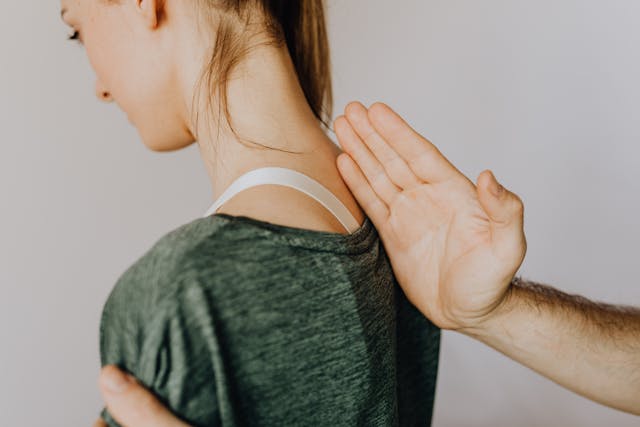
This is where massage is probably most effective. Myofascial trigger points – those specific spots that feel like a hard knot and hurt when you press them – respond well to direct pressure. A good therapist can work into those areas in a way that stretching simply can’t reach.
If you’ve ever had someone press into your upper back after a week of stress and felt that mix of pain and relief, you know what I mean. That’s not magic. It’s increased blood flow, mechanical pressure releasing tension in muscle fibres, and your nervous system calming down.
For post-exercise recovery
There’s decent evidence that massage after intense exercise reduces perceived soreness and muscle tension. It’s not going to repair your muscle fibres faster on a cellular level, but it does seem to reduce inflammation markers and improve how you feel. Which matters, especially if you’re training multiple times a week.
Professional sports teams have physios for a reason.
For tendinitis
Here it gets nuanced. You don’t want aggressive deep massage directly on an inflamed tendon – that can aggravate it. But massage on the surrounding muscle that’s compensating or pulling on the tendon ? That can absolutely help. If your calf is chronically tight and putting extra load on your Achilles, loosening that calf through massage reduces strain on the tendon.
So it’s not “massage yes or no” – it’s about where and how.
So what do you actually do ?
Here’s a practical breakdown based on the situation :
You’re sore after a hard session : Light movement, easy stretching if it feels good, foam rolling at low pressure. Massage is fine and probably helpful. Don’t force anything.
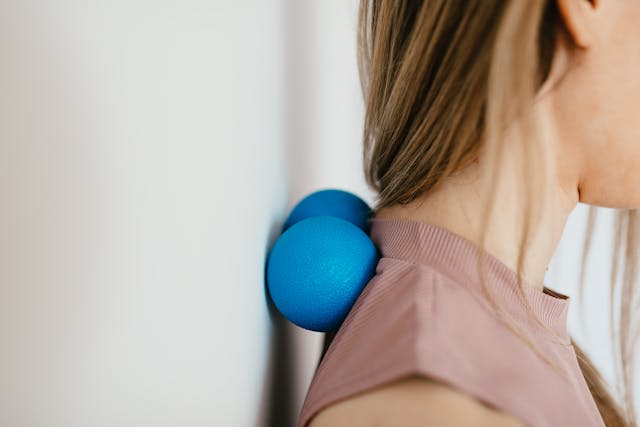
You have a specific tight spot or knot : Massage first – either professional or a foam roller / lacrosse ball targeting the area. Then stretch once the tissue is warm and more pliable.
You think you have tendinitis : Lay off the aggressive stretching on that tendon. Ice in the acute phase. See a physio if it persists more than a week or two. Gentle massage on surrounding muscles is okay, but hands off the tendon itself until the inflammation calms down.
You’re just generally stiff from life : Combination of both. Regular stretching as a habit, massage occasionally when things build up.
One thing most people skip
 Whether you’re stretching or getting a massage, the context around it matters as much as the technique. Sleep, hydration, training load – if you’re consistently under-recovering, no amount of foam rolling will fix it.
I find that a lot of people treat massage or stretching as a patch for an underlying problem that’s really about volume. They’re doing too much, not sleeping enough, and trying to compensate with recovery tools. That doesn’t work long-term.
Fix the root issue first. Then use these tools to fine-tune.
The short answer
Tight muscles or general tension ? Massage, then stretch.
Post-exercise soreness ? Either works. Don’t go too hard with either.
Tendinitis ? Skip the stretching on the tendon. Massage the surrounding muscles. See a professional if it doesn’t improve.
The instinct to stretch everything is understandable – it’s simple, it’s free, it feels productive. But it’s not always right. And sometimes it makes things worse. Knowing the difference is genuinely useful.